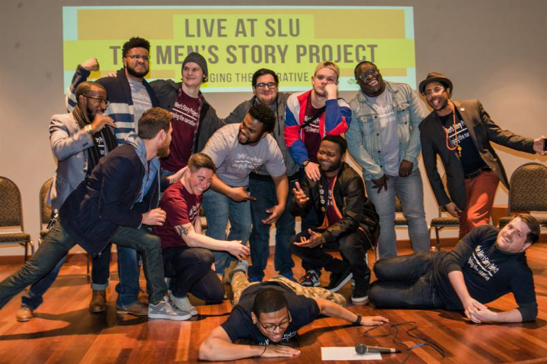
The presentations and workshops described below are facilitated by Dr. Josie Lehrer and can take place online or in person. Their content and length can be tailored for your group's interests, including for fraternities, military, athletic teams and other groups.
Dr. Lehrer is open to co-facilitating with colleagues from your organization, and can do events in English or Spanish (including Spanish-language MSP film content).
Fees are sliding scale. Please contact us to discuss details.
Presentation Formats
Keynotes & lectures
Lecture topics can be tailored to your organization’s interests -- such as the social construction of masculinity; how men can take action for violence prevention and gender justice; and how social notions of masculinity relate to varied health and social justice issues for people of all genders.
Dr. Lehrer can also discuss her 15-year journey of founding and building the MSP, including insights for social entrepreneurs and activists.
MSP film screening & discussion
(1.5-3 hrs)
Based on your organization's interests, we curate a tailored set of videos of men's personal stories from the MSP's library of over 200 powerful original pieces. This film screening is followed by a presentation and group dialogue on masculinities in relation to men's mental and physical health, the manosphere, relationships, gender-based violence, sexual health, LGBTQIA+ topics, substance abuse, gender equality, fatherhood and caregiving, and intersections with other aspects of identity (e.g., race/ethnicity, disability, etc.).
“The presentation was affirming… I feel more confident about standing up for my ideas now than I did before.”
-Student, University of Wisconsin-Madison
“I find the film and the MSP very compelling. I was vaguely aware of these issues before, but this presentation has allowed me to see the cut and dry reality, and to be more critical of my own actions as well as the actions of other men.”
-Chris Fernandez, President, Intrafraternity Council, University of Wisconsin-Madison
"Dr. Lehrer’s presentation of the Men’s Story Project program, via Zoom, at our University was incredibly well-received. The 50+ attendees appreciated the opportunity to hear the powerful stories provided by the presenters and to respond openly to them in small break-out discussions. The audience was highly motivated to discuss action plans once the presentations were complete." -Dr. Teresa Cooney, Professor and Chair, Dept. of Sociology, University of Colorado Denver
“Love that your presentations and MSP is deeply rooted in research and empirical evidence as well as emotional response! Can’t wait to participate this year, but REALLY can’t wait for the years of MSP at UO in the years to come.”
-Keith Frazee, Assistant Director of Orientation Programs, University of Oregon
Interactive workshops on masculinities, health & social justice
(4-8 hrs)
These workshops use tailored selections of men's filmed stories to spark group dialogue on masculinities - in relation to issues including family and romantic relationships, men's mental and physical health, gender-based violence, sexual health, LGBTQIA+ topics, substance abuse, gender equality, men's caregiving, and intersections with other aspects of identity (e.g., race/ethnicity, disability, socioeconomic status, etc.). Didactic content and group activities.
“Dr. Lehrer is a very effective speaker and a skilled workshop facilitator. The day-long workshop I co-led with Dr. Lehrer using the Men’s Story Project film, here at JFK University, was very successful in stimulating a moving and educational discussion on the social construction of masculinity and pain and violence associated with it…”
–Gary Hoeber, Associate Professor of Counseling Psychology, John F. Kennedy University
“I appreciated the honesty among the men. The safe environment was very effective for the compassion and love shared and felt.”
–Workshop participant, JFK University
“I loved ALL OF IT! The film clips were AMAZING and fostered a really deep, rich dialogue. My heart is full and open!”
–Workshop participant, JFK University
Creative workshops on masculinities, health & social justice
(8-12 hrs)
These workshops use curated sets of MSP videos of men's stories to spark dialogue on masculinities in relation to key health and social justice issues. The workshops include didactic content, participatory activities and a creative segment which includes: a) guided personal writing/creation, b) small-group feedback on works in progress, and c) a culminating evening event for the sharing of personal stories, which can be made open to a broader audience.
“This was the first time I have really shared my experience of my own masculinity in a public way. I was able to explore the pain I have around my masculinity, discover my own healing process, and then share this process with my community. Being able to share in such a brutally honest and vulnerable way was an effective approach to presenting my experience with the community.”
-MSP presenter
“It was liberating to speak to a common experience that is an unspoken reality for most men.”
-MSP presenter
Create an original Men's Story Project production!
This is the MSP's flagship program, which is built to be locally adapted and led by partner organizations. It includes an 8-week workshop series on masculinities, peer leadership and storytelling, where participants: 1) build community, 2) learn together about topics at the nexus of masculinities, health and social justice, and 3) craft personal stories they’ll share at culminating live, public storytelling events. These live events are typically filmed to create media.
The full MSP program, from planning and workshop adaptation to participant selection, program implementation, and post-program evaluation, takes 6-7 months for program leads and engages participants for 10-12 weeks.
This program can be adapted in many ways, such as for working with cohorts of men who want to be forces for good online, challenging harmful narratives of the manosphere via their social media platforms.
MSP Resource Package
This bundle of training, coaching and materials helps groups implement and evaluate their local MSP program, including the workshop series and culminating live storytelling production. It includes:
-
- Five live training webinars for facilitators and producers (2 hrs each)
- MSP Action Guide: How to run an MSP program, step by step. 120-page guide with content on participant recruitment, story coaching, and ethics and harm prevention in personal storytelling work with men. Includes editable program templates (e.g., evaluation forms).
- MSP Curriculum: 8 workshops, 2.5 hours each, focused on men's peer leadership for positive masculinities, building community, and crafting personal stories for social change.
-
- Each workshop has an hour-long learning segment, with core educational information and group dialogue and activities. The learning segments address the social construction of masculinities, and masculinities in relation to intersectionality, relationships, men’s mental and physical health, violence prevention and bystander intervention, men’s experiences online, peer leadership, allyship, other gender/social justice topics, and men's personal storytelling and comms for social change.
- Most of the workshops also have small group story circles, where participants share their draft stories, receive feedback, and support each other.
- Each workshop starts and ends with check-in and check-out circles, where participants share reflections and takeaways. These circles also include icebreakers, group games and emotional literacy and mindfulness exercises.
-
-
- MSP License & Presenter Contract - Includes harm prevention guidelines & media release form
- Bi-weekly coaching calls with local MSP teams as programs are underway
- Program evaluation support
- Connection with other MSP teams for shared learning across locations
- Post-project debrief session on evaluation insights and next steps
- Publicity support, including featuring the work on the MSP platforms
Additional support such as remote 1-1 story coaching for presenters, graphic design, and video editing is available for an added cost.
The MSP program can be adapted in varied ways, such as:
-
- Working with groups of men online who live across a state or country. The MSP workshops and storytelling events take place online.
- Working with cohorts of male online influencers who want to promote positive masculinities. The creative output at the end of the workshop series is content that they share directly on social media (rather than live storytelling events)
- Working with other leaders and artists who want to use their platforms to share stories and reflections on masculinities
- Formation of touring groups
- Podcasts and anthologies of men's stories
- Working with participants of all genders (The MSP name can always be replaced with another that's suited for the context.)
The MSP's upcoming Fall Training Cohort, which will include multiple organizations and universities adapting and leading local MSP programs, starts October 28, 2026. Apply to join the cohort here! Applications are being received on a rolling basis.
MSP Resource Package cost: $8499, sliding scale. Groups that can pay the full rate enable groups with limited financial means to participate.
An informational webinar on the MSP is here, and feel free to contact us with any questions.
The MSP's training webinars discuss the nexus of masculinities, health and social justice; deciding on your program's focus topics and target audience; recruiting and selecting presenters; ways to help men craft impactful personal stories; the MSP group workshop process (e.g., community-building, group learning, story circles); harm prevention, accountability and ethics in the MSP; doing trauma-informed and survivor-centered work; working with men who have caused harm; program evaluation; and creation of powerful and responsible media content. For each MSP training cohort, the webinars are recorded and stored online for access anytime.
The MSP Training Guide is a step-by-step, 120-page toolkit that discusses the MSP’s research background and educational approach; how to help presenters craft impactful stories; group facilitation; event production; creating MSP films and social media; how to work with men who have used violence; accountability and harm prevention; and other topics. It provides helpful editable templates including a Call for Submissions, event introduction, press release, and feedback forms for audience members and presenters.
The Guide builds upon research and best practices in areas including gender-transformative public health programming; intersectional research on men and masculinities; personal storytelling; social and behavior change communication; entertainment-education; feminist movement-building; and program design and evaluation.
The MSP License is a legal document that lets groups use the MSP name and logo, join the MSP network, connect with other MSP groups, and share their work on the MSP website and other social media. It includes content about the MSP's social justice mission and guidelines on ethics and harm prevention.
The MSP Presenter Contract is a legal document for MSP presenters that addresses media permissions, public naming preferences, and harm prevention guidelines. To see a copy, please contact us.
To give you a sense of what goes into creating an MSP production, here are the main things your team would be doing over the course of 6-7 months. (This info is focused on college campuses; community groups would follow a similar path except for the campus organizing elements.)
- Form a core MSP team of 2 facilitators, 2-3 story coaches and 2-3 producers.
- Have the MSP license signed by a campus representative (e.g., Dean, staff or faculty member)
- Participate in MSP live training webinars (10 hours over 2 weeks, or tailored for your group). The webinar recordings will be shared.
- Identify 2+ co-sponsoring groups (e.g., Sexual Assault Prevention/Response Office, Gender Resource Center, LGBTQIA+ Center, Intrafraternity Council, athletic teams, ROTC)
- Decide on your program's focus topic(s) and target audience
- Recruit submissions and select the group of MSP presenters
- Tailor the workshops for your group and focus topics
- Hold 8 weekly workshops with the group of presenters
- Provide 1-1 story coaching sessions for each presenter (2+ each)
- Participate in coaching sessions with the MSP Hub team every few weeks, to receive any guidance or support desired while the program is underway.
- Graphic design & publicity for the upcoming live storytelling events
- Group rehearsal (1-2)
- Present your MSP production at least twice with live audiences, including audience dialogue and resource fair
- Consider filming the live production to create social media videos and/or other content, to increase the reach of your work.
- Gather feedback forms from audience members, presenters and production team members
- Host a celebration and debrief gathering with presenters
- Share program feedback and media with the MSP Hub team
This is a fair amount of work, but it’s very doable! The more team members you have, the lighter the load for each indidivual. 🙂
Here are the key team roles:
- Producers. Two or more students or staff to lead event production (e.g., distributing the Call for Submissions, recruiting presenters, finding co-sponsoring groups, fundraising, graphic design, publicity, communications, managing project files)
- Workshop facilitators. The facilitators direct the production overall. They are usually staff members, faculty members or graduate students with a strong background in facilitating group education on masculinities, intersectionality, feminist activism, gender-based violence prevention/response, and gender justice. They decide on the focus of the production, select the presenters from amongst the set of applicants, and adapt and lead 6-8 weekly workshops with them. At the workshops, the presenters will share and give each other feedback on their personal works in progress, learn together about topics at the nexus of gender, health and social justice (e.g., discussing short films, engaging in participatory exercises and discussions), and build community.
- Story coaches provide optional 1-1 support to presenters outside of the group workshops, to help the presenters continue developing their stories. Like the facilitators, the story coaches should have a strong background in masculinities and intersecting health/justice issues, so they can support individuals crafting personal stories on sensitive topics.
Notes:
- If one person wants to be both a producer and facilitator, that can work! Just know you’ll be busy. 🙂
- Consider reaching out to centers such as the Sexual Assault Prevention/Response Office or the Gender Resource Center to see if there’s a counselor/educator there who might like to join the team and serve as a workshop facilitator.
- Folks of all genders and identities are very welcome as production team members – the more diverse the team can be, the better!
- Team members can consider doing this work for course credit (e.g., independent study, thesis, peer-reviewed paper).
The cost for creating a campus/nonprofit MSP production is $8499 sliding scale, for the MSP resources, training, coaching, and network participation. All interested groups should apply, regardless of finances!
Your team might opt to budget additional funds for filming and editing, venue rental, sign language interpretation, event programs, group t-shirts, etc. Costs will of course vary, but will likely be around $2-5K.
Having co-sponsoring groups is helpful for raising funds (each group contributes a bit), and also raises the public visibility of your production.
If you have questions about creating Men’s Story Project productions, the 2020-21 cohort application, or other MSP programs (film screenings, workshops), please contact us.